OpenAI's new device is a data capture tool, because we've reached Peak Token
- Published
- Filed under
- Academic, data science, Technology
- Reading time
- 3 min
Much has been made of the recent announcement of the collaboration between OpenAI co-founder Sam Altman and Apple design guru Jony Ive on a new hardware device (Jess Weatherbed, The Verge), and speculation has followed on the form it might take (Ryan Morrison, Tom’s Hardware).
Less has been written, however, about the market niche such a device serves.
Surely we don’t need another AI hardware device to speak into, given the failures of the Rabbit R1 and the Humane AI Pin? The market opportunity for such a device also seems limited given that we have chatbots on our phones - particularly with now-ubiquitous mobile internet coverage.
But if we examine the intended capabilities of the speculative device, its function and value become clearer. They’re not for the consumer, they’re for OpenAI.
Let me unpack.
The Verge reported that during the call in May, Altman
… dropped some hints during the call that shape our expectations, however, including that it will be unobtrusive, fully aware of a user’s life and surroundings, and will serve as a “third core device” a person would put on a desk after a MacBook Pro and an iPhone.
Fully aware of life and surroundings hints at an embodied view of intelligence
“Fully aware of a user’s life and surroundings”, when translated to technical functionality, means having sensors and recording capability to store things like geo-spatial data - where a person was, when, and what they were doing at that location. It means listening to conversations the person was having, who they were having them with, and what they talked about. And it might mean seeing what activities a person was doing, and what objects they were interacting with, and for what purpose.
This data could be used, hypothetically, to provide context for generative AI models, that are well-known for hallucinating - generating outputs that are provably false and misleading. A key way to address hallucination in LLMs is through retrieval augmented generation (RAG) - essentially a knowledge graph that an LLM checks its output against before sending it to the user. Thinking of it as a “think before you speak” brake for a person who lacks a filter between their brain and their mouth.
LLMs are probabilistic (the “stochastic” in Emily M. Bender et al’s paper “On the Dangers of Stochastic Parrots”1). This means they work on probabilities - a “good” model will get the right answer or deliver a factually correct response most of the time. RAG aims to make LLMs more deterministic (rules-based) by “grounding” them in a map of reality.
Language theory (symbolic view) versus grounding theory (embodied view) of intelligence
Here, we reach a theoretical divide.
Some researchers believe that reality can be modelled purely through symbols. I’m over-simplifying here, but essentially this argument holds that our reality can be entirely represented through language.To better model reality, we need more language to model on. The opposing view is the grounded theory - that our reality is embodied and experienced, and requires sensori-motor input. Language isn’t enough to model our world - we need to know how the world looks, feels, hears and smells. Recent research seems to suggest that having multiple modalities provides better “conceptual alignment” between AI model and human representations of the world2 - that is, the embodied view is gaining traction.
But how might we model those modalities?
Peak Token, the Token Wars, and the need for more data for an embodied representation of the world
In a recent talk given at both Everything Open and the Melbourne Machine Learning and AI Meetup, I introduced the concept of the “Token Wars”. Essentially, I argued, tokens - the chopped up, vectorised data used to train AI models - are not a public resource. They are both excludeable and rivalrous - and we’re running out of new, human-generated, real tokens of language data because of wholesale web scraping by bots. New LLMs are trained on nearly all the publicly available data in the world.
We’ve reached Peak Token.
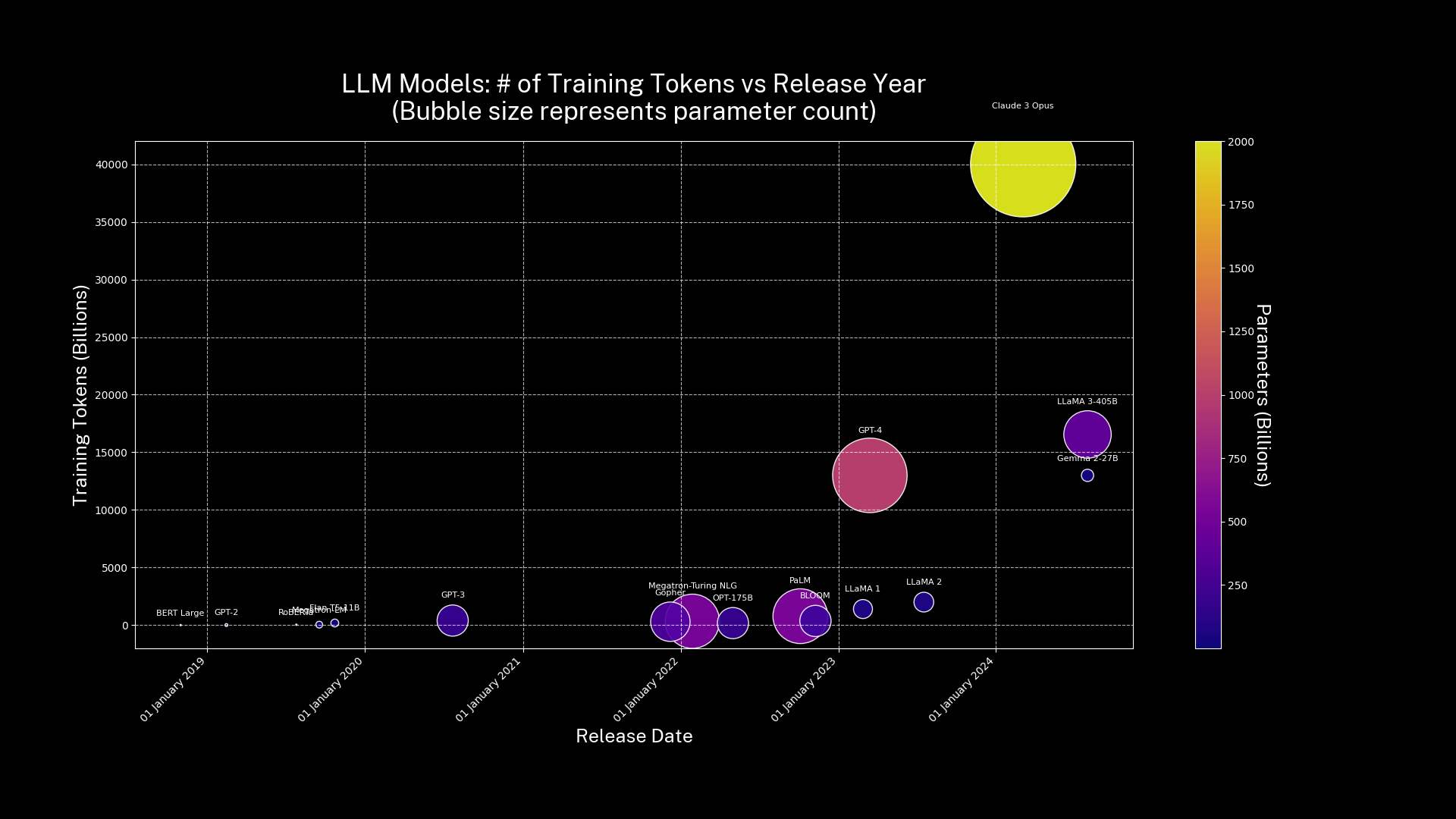
https://github.com/KathyReid/token-wars-dataviz
So, if we’re leaning toward the embodied view of intelligence, and we’ve reached Peak Token with language data, this means that industry needs more multi-modal data to model the embodied view of intelligence.
A device, for example, that can sense where someone is, what they’re saying, the sounds around them and the objects they’re interacting with.
The OpenAI device’s primary purpose is for gathering multi-modal data for embodied AI models.
Any benefits it provides to the consumer in the form of better LLM responses are at best, a secondary feature, and at worst, incidental.
Will you pay to have the device gather more data about you?
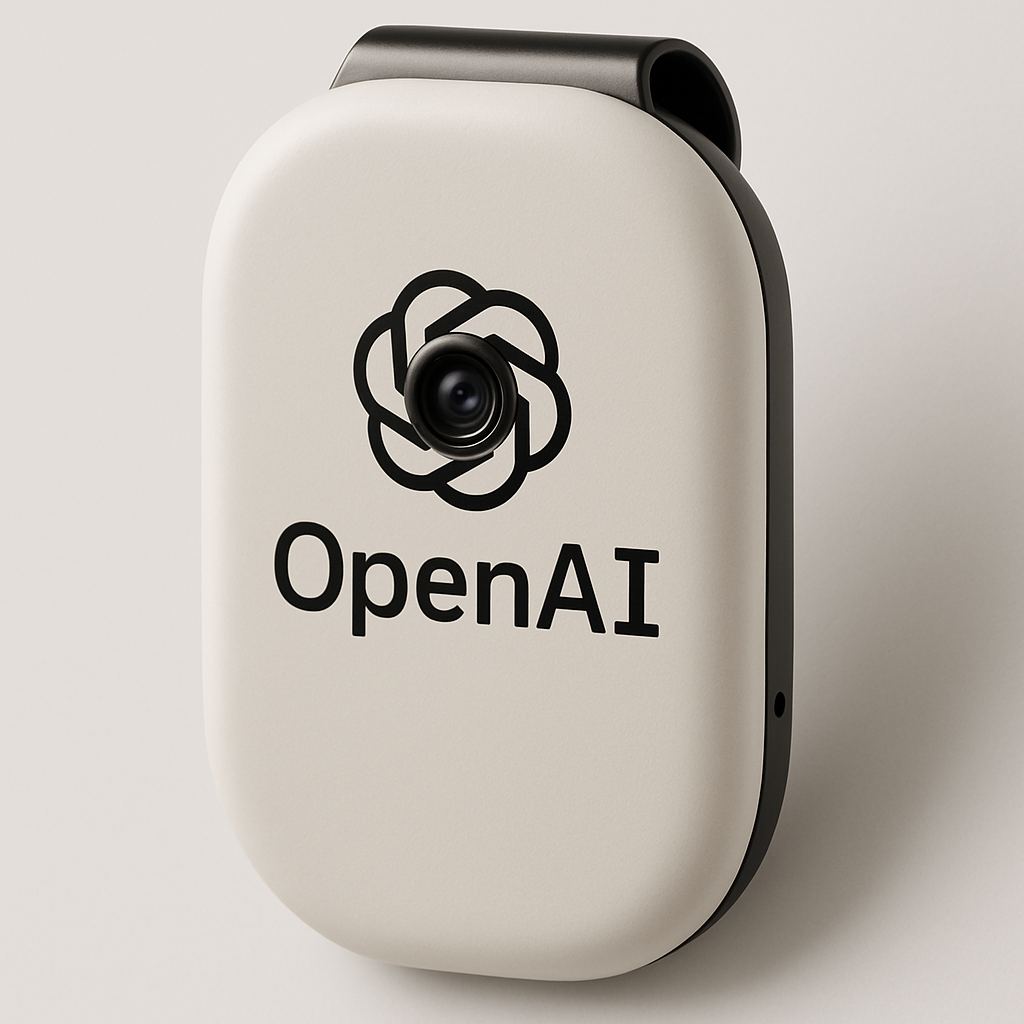
Image: generated by ChatGPT using the prompt:
Generate an image of the speculative hardware device proposed by Sam Altman and Jony Ive for Open AI. It should contain the OpenAI logo and be screenless, in the form of something that could be clipped on to someone’s shirt.
-
Emily M. Bender, Timnit Gebru, Angelina McMillan-Major, and Shmargaret Shmitchell. 2021. On the Dangers of Stochastic Parrots: Can Language Models Be Too Big? 🦜. In Proceedings of the 2021 ACM Conference on Fairness, Accountability, and Transparency (FAccT ‘21). Association for Computing Machinery, New York, NY, USA, 610–623. https://doi.org/10.1145/3442188.3445922 ↩︎
-
Xu, Q., Peng, Y., Nastase, S.A. et al. Large language models without grounding recover non-sensorimotor but not sensorimotor features of human concepts. Nat Hum Behav (2025). https://doi.org/10.1038/s41562-025-02203-8 ↩︎